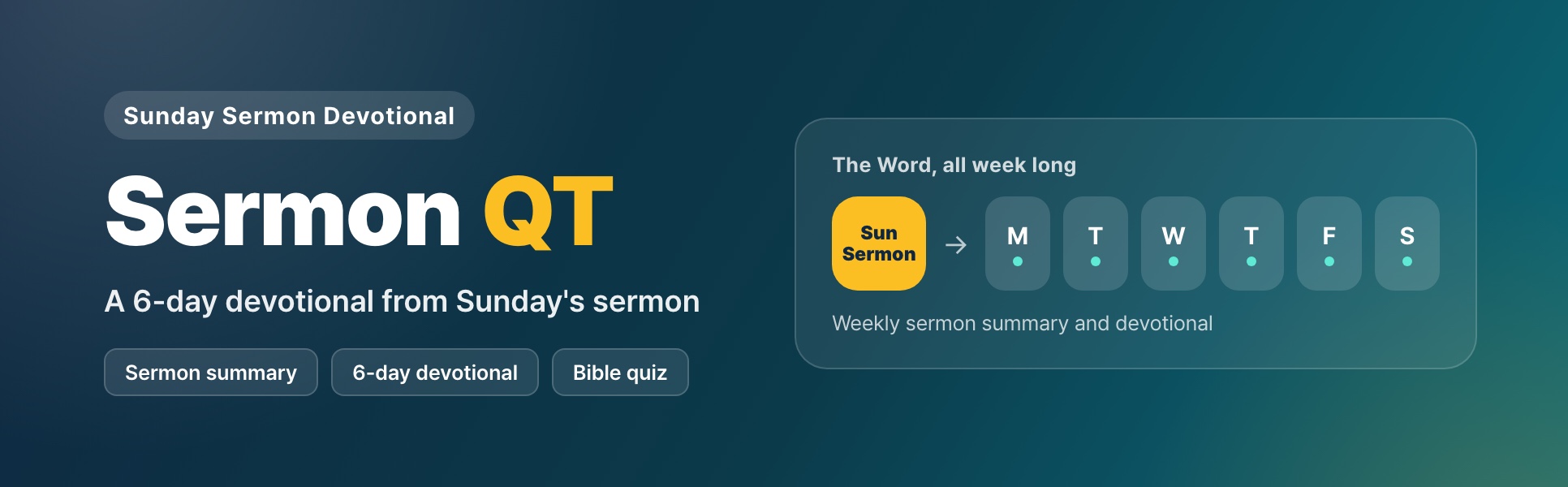
Amen. Everyone, do you remember how 1 Kings ended last week? That's right. 1 Kings 18 is the battle on Mount Carmel. A battle broke out between Elijah and the prophets of Baal and Asherah, and that battle was so tremendous that it is called the battle on Mount Carmel. It remains a famous memory for us as well. Reflecting on last week, two bulls were placed on altars, and a fight broke out among the prophets at a ratio of 850 to 1. It was to see who could burn the bull first. Depending on where the fire appeared, it would be determined who the true God was. It was a contest to see the power of who the God we believe in, the true God, is. However, the opposing side took all the favorable conditions first and set the game in their favor. For example, with a ratio of 850 to 1, their numbers were much more advantageous. They performed rituals and prayed, and wouldn't 850 people be more powerful together? "You go first." They said, "You go first." That's right. Not only did they go first, but there was also no time limit. They could do as they pleased until they were exhausted and collapsed. From morning until noon, they did as they wished, even injuring themselves. There were no limits to their shouting. There were no restrictions, and they were given the privilege to do as they pleased. On the other hand, Elijah's conditions were extremely unfavorable. That's right. He was not only outnumbered 850 to 1, but could he handle it alone? If they tried for a moment and failed, we wouldn't even have the opportunity to intervene. We would have to wait until they were finished. So, he couldn't say, "Now it's our turn" after an hour. He just had to wait. Moreover, Elijah dug a trench, prepared four jars of water, filled them, and poured them over the sacrifice, wood, and stones. Not just once, but three times. So, he poured a total of 12 jars. That's right. Those 12 jars seem to have significance, right? That's right. He poured until everything was soaked. So that the fire could easily be extinguished when it came down. They had all possible favorable conditions for the battle, and we had all possible unfavorable conditions. But then God sent down fire, and everyone realized that the Lord we believe in is the true living God. The Lord is God! The Lord is God! And afterward, Elijah dealt with those prophets. The prophets of Baal, that is. That's right. So the people seized those prophets, and it seems that Elijah almost single-handedly killed them. After killing hundreds, a great rain began to fall, ending the drought. That is the end of chapter 18. So what verse can we expect in chapter 19, verse 1 today? Everyone confessed God, the prophets were all killed, it rained, and Elijah should have finally become the hero of the nation. Everyone should have come out to worship the God that Elijah serves. It should have been that kind of atmosphere. However, verse 1 of chapter 19 begins like this: Ahab reported to Jezebel all that Elijah had done and how he had killed all the prophets with the sword. Here, the word "reported" is at the level of a subordinate reporting to the king. Ahab thought it was over, but there was a higher situation. So the game was not over yet. In verse 1, underline the part of Ahab's words that makes you think, "That's not it." He says, "All that Elijah had done and how he had killed all the prophets with the sword." If you were in his position, what would you do? Did Elijah do all this alone? Right? He should have reported what God had done, what God had accomplished, what God had done through Elijah. "I was so amazed. God is alive. Look at all that God has done." He should have said that. But instead, he said, "This Elijah is the problem." "He is opposing us." "He is like a thorn in our side." That's right. "If it weren't for Elijah, we would have prospered." Rather than repenting at this level, Ahab conveyed this fact to Jezebel, and Jezebel became extremely angry. That's right. And this is the word of 1 Kings 19:2. Jezebel sent a messenger to Elijah saying, "You will surely die." Elijah did not repent or turn back from his desire for revenge; instead, she expressed tremendous anger and swore to kill Elijah. That's right. So she sent people to tell Elijah, "You will die." Certainly. "You will surely die just like the death you have caused." She said, "If not, may the gods do severe harm to me." Who does Jezebel still believe in? They believe in their own gods. That's right. In the battle for power, Jezebel and Ahab had to give up what they believed in, but they still believed in their gods. And they sent people to warn Elijah that he would die. From Elijah's perspective, he suddenly experienced some kind of spiritual withdrawal symptoms. Could it be so? Wow, what is this? That's right. He dealt with all the prophets, killed them, brought rain, and called down fire. That's right. So they were given the utmost advantage, and we were given the utmost disadvantage. That's right. When you make a contract or relationship with worldly people, you give them all the advantages, and I receive the utmost disadvantages. That's right. When God works, it becomes so clear that God has done it. This is a victory that no one can dispute. The opposing side cannot say, "That's unfair, let's try again." If they achieve such a clear victory that they wouldn't want something like best of three, then everyone and the king should have repented and returned to the God that Elijah believes in. But despite such a miraculous event, they attacked him and said they would kill him. So suddenly, from Elijah's perspective, it must have felt so empty, and he must have felt a great void about what he had done all this time. He must have wondered if his efforts were truly in vain. So looking at verses 3 and beyond in chapter 19, Elijah saw this situation and rose up to flee for his life. Since they said they would kill him, Elijah thought, "Ah, I will die," and he reached Beersheba, which belongs to Judah. A prophet who was active in northern Israel fled about 140 kilometers down to the border of southern Judah. Beersheba is in the south, isn't it? Where did he go from there? He went alone into the wilderness and traveled a day's journey. I don't know how long it takes to walk a day in the wilderness, but he walked about 15 to 20 miles. That's right. He sat alone and said, "I wish to die. 'Lord, it is enough! Take my life.' 'I am no better than my ancestors.'" Everyone, here "it is enough." Enough. And "take my life." What does this mean? He means he has done enough. This is what it means. To say enough means that he can no longer do anything. That's right. And he requests to die. Take my life. What is difficult to understand here is that he fled south to save his life, but now in the wilderness, he says, "I wish to die." The statement "take my life" seems to contradict his actions. He desperately fled to live, but when he says, "I wish to die," it means he can no longer do anything. That's right. He can no longer continue as a prophet. That's right. "It is enough" means he has done as much as he can as a prophet. I can no longer do this work. If I have to continue as a prophet, I would rather die. That is what it means. I would rather die. As a prophet, this is truly something I cannot do. I have done all I can do. Just kill me. That's right. Everyone, do you understand his heart when Elijah says that? If you misunderstand this part, you might think he wants to die. He may seem like he is trying to commit suicide. He may even seem like he is giving up on his life. Some might think he is unconsciously trying to commit suicide. There are elements that can be interpreted in a psychological direction. He may have truly felt like he wanted to die. However, what I want to say here is that he is completely exhausted and can no longer bear the duties of a prophet and wants to let everything go. I can no longer do this. I can no longer do this. I have done enough. How can I do more? As a prophet, I fought 850 to 1, killed 450, called down fire, and showed this power to many people, but no one helped me, and I felt like I did everything alone. I truly think I can do nothing more. I can no longer do this. That's right. This is how it came out. Everyone, this is a reaction that you or I can show. That's right. Even if we don't do something as great as Elijah did, we can easily become exhausted by small things and say, "I have done enough." "I can no longer do this." And we often complain, "Why do I have to do it? Others aren't doing it." That's right. Our hearts grow cold. How often have we seen our dedication limited and our passion quickly fade? We experience many frustrations and discouragements, both big and small. But to such people, God comes. In 1 Kings 19:7, see what God says when He comes to him. The angel of the Lord came to him, gave him food, let him sleep, and touched him. It says that he gently touched him. And in verse 7, he came again and touched him again. He came again and touched him, saying, "Arise and eat, for the journey is too great for you." Everyone, what is the purpose of this second command to touch him again and wake the sleeping person and tell him to eat again? It is that the journey is long. That is what it means. Because you have a long way to go, eat well, regain your strength, and continue running. That is the meaning of His words. Everyone, we need deep sleep, and we need to eat and take in nutrition. That's right. Sleep and food can restore us. That's right. Even a powerful prophet like Elijah does not only need spiritual prayer. At such times, sufficient rest and good food are necessary. That's right. The reason God gives food and rest is to help him run further. That's right. To help him continue running. He is saying that there is a destination. So He is leading Elijah to where he needs to go. Where is that? "He arose, ate, and drank, and with that food, he gained strength..." He ate and gained strength, traveling for 40 days and 40 nights until he reached the mountain of God, Horeb. That's right. God led him to Horeb, and when Elijah arrived, he entered a cave and spent the night there. And the word of the Lord came to him, asking, "Elijah, what are you doing here?" That's right. Through the angel of God, God fed him, let him sleep, woke him up again, and gave him courage to run to the mountain of God, Horeb. God was waiting for him there. "You have come well. Why have you come here?" God welcomed Elijah and asked, "What are you doing here?" Everyone, the destination was Mount Horeb. The reason for eating and drinking and resting was to take him to Mount Horeb. That's right. Everyone, do you understand? That's right. He took him to Horeb to restore him. That's right. Everyone, in 1 Kings 19:11, it says, "The Lord said, 'Go out and stand on the mountain before the Lord. The Lord is about to pass by.'" On Mount Horeb, God tells Elijah to go out and stand before Him. That's right. And when he stood there, the Lord passed by. It happened. When the Lord passed by, He was not in the powerful wind, nor was He in the wind that broke the mountains and shattered the rocks. After the wind, there was a great earthquake, but the Lord was not in the earthquake. After the wind and the earthquake, God stood before Elijah. He passed by. Where has Elijah now come? He has come to Horeb, the mountain of God, and when God passed by Elijah, there was a great wind and a great earthquake, but God was not in them. What does this mean? Looking at this scene, those of you who have read the Bible a little should recall Exodus. That's right. Exodus. Ah, in Exodus 33, the Lord says, "I will cause all my goodness to pass before you." He passed by. That's right. What was the atmosphere of Moses in Exodus 33? What happened in Exodus 32? Exodus 32. The golden calf incident. The Israelites made a golden calf and called it God, complaining about many hardships and wanting to go back, and they could not wait while Moses delayed. In that situation, Moses felt his limitations. "Ah, these people are too much." "Can I really lead them?" "I cannot do it alone." God must be with me, but these people are too stubborn for me to handle. In such a state of frustration and discouragement, God called Moses and said, "I will cause all my goodness to pass before you. I will proclaim my name, the Lord, before you." "I will have mercy on whom I will have mercy, and I will have compassion on whom I will have compassion." And "You cannot see my face, for no one can see me and live." "When I pass by, you cannot see me." "I will hide you in the cleft of the rock and cover you with my hand. When I have passed by, I will take away my hand, and you will see my back, but my face must not be seen." This scene in Exodus 33 is about Moses, who was called by God but was frustrated and discouraged. God caused him to pass by and experience His divine presence, renewing his calling and giving him the strength to overcome spiritual stagnation and lead Israel. That's right. That God passed by means that God is with him. That's right. God made him experience His presence. Moses is not alone. I am with you. If I were to appear directly to you, you would die, but the best way for you to feel me is for me to pass by. So when Elijah is struggling, God says, "Let's go to the scene of Horeb, where Moses hid in the cleft of the rock and experienced my presence." Let's go to that scene. Eat, sleep, gather strength, and go to Horeb. And go to that cave. Hide in the cleft of the cave and experience me passing by. So to give Elijah the strength to rise again even in such great discouragement, God led him to Horeb, where Moses received grace and experienced God's presence. God led him there. Elijah experienced miraculous restoration through this, but in fact, Moses also said many times, "I cannot do it." He said that quite often. For example, if you turn the page, in Numbers 11, Moses says, "This people is tired of eating manna and demands meat, complaining that Egypt was better, and there are too many complaints, and my burden is too heavy, and I cannot bear them." "This burden is too heavy for me. I cannot bear this people alone." "I cannot do it." "I will let it go." "If you treat me like this, please kill me." "Dying would be grace for me." "I cannot endure this state any longer." "I do not want to see this miserable sight anymore." "I do not have the strength to bear this ministry, this pastoral work, this people." "I want to run away from here." "I do not want to see that anymore." "Please do not let me see it." That's right. "Dying would be my way." "Dying would be grace for me." "Why did you make me be born here? Why did you bring me here?" "I curse the day of my birth." "Living is suffering." "Why did you call me to this place of calling? Is it to make me suffer like this? I cannot endure it." "I cannot bear that character, that situation, this poverty, this lack, this thirst." "I cannot bear it alone." "If you tell me to continue this work, I would rather die." "This ministry is more painful than death." When he cries out like this, do you know what the prescription God gave to Moses was? That's right. In Numbers 11:16 and the following verses, the Lord said to Moses, "Gather for me seventy of the elders of Israel, the leaders and officials of the people, whom you know." "Let them come to the tent of meeting and stand there with you." "I will come down and speak with you there, and I will take some of the spirit that is on you and put it on them, and they will share the burden of the people with you. You will not have to bear it alone." When he was struggling like this, God raised up co-workers for him and gave them grace to share the work together. You cannot lead everything with just miracles. Now, through partnerships with people, God works through people. I work through you, but I also work through others. Do not think you are alone and struggle. Co-workers will help you. This is how God's work is accomplished. The God who spoke to Moses in this way also does the same for Elijah. If you turn the page, in 1 Kings 19:14 and the following verses, Elijah says, "I have been very zealous for the Lord God of hosts. The children of Israel have forsaken Your covenant, torn down Your altars, and killed Your prophets with the sword." "Do you know how much I have struggled to deal with those cruel people, those who rebel and serve idols? Do you know how much I have suffered over the fact that I have to bear this burden alone? But their response is that they want to kill me. I have borne this work alone, and now I am the only one left, and they want to kill me, how painful and resentful it is—Oh God, I can no longer do this." This is what he is saying. Then the Lord's response to him comes in verse 15. "Go back the way you came, and go to the desert of Damascus. When you get there, anoint Hazael as king over Aram." Wait a minute, who is Elijah? Can he really anoint the king of Aram? Can he anoint the king of Aram, who is not even Israel? He is giving Elijah a shocking mission. And in verse 16, He tells him to anoint Jehu as king over Israel. You can appoint the next king of Israel. While saying this, He also tells him to anoint Elisha, who will succeed you as a prophet. After anointing the king of Aram, the king of Israel, and the prophet Elisha, let’s read verse 17 together. Start. "Whoever escapes from the sword of Hazael will be killed by Jehu, and whoever escapes from the sword of Jehu will be killed by Elisha." Everyone, whoever escapes from the sword of Hazael will be killed by Jehu, and whoever escapes from the sword of Jehu will be killed by Elisha. What does this mean? It means that everything will be accomplished, even if it seems impossible. Ah, this means that God's work continues through people. That's right. Even if it seems that there is a disconnected history, the next person rises, other things happen, and history continues to fulfill God's will. That's right. If someone cannot do it, someone else will do it, and if someone makes a mistake, someone else will correct it. God continues that work. This is what He is saying. And in verse 18, a verse you know well follows. "Yet I reserve seven thousand in Israel—all whose knees have not bowed down to Baal and whose mouths have not kissed him." Everyone, this seven thousand does not necessarily mean exactly seven thousand. It means an incredibly large number. That's right. I have reserved seven thousand. It means I have reserved them. That's right. Look closely at the flow of verse 18. That's right. Anoint the king of Aram, anoint the king of Israel, replace the prophet, if someone cannot do it, someone else will do it, the next person will handle it—and this continues until God reserves seven thousand. This means that those seven thousand are connected to us. It means that God's work continues. There were many people in that era, but also while God was accomplishing all this, you thought you were working alone, and that work was so hard that you said you could no longer do it. But God worked through you and gave you co-workers to finish the work. When you were struggling with a narrow view limited to Israel, I am the God who also raises the king of Aram. I am leading the history of Israel internationally and politically, and while you may feel you can no longer bear the burden of being a prophet, I am the God who does the work of God. If you cannot do it, I will raise Elisha next and continue to raise people for all the generations of God's people to come. Just as God helped Moses when he said he could not do it, when Elijah says he cannot do it, God raises people to help him. When God miraculously appeared to Elijah, He was not in the earthquake, nor was He in the great wind. Where does the Bible say He was? It says He was in a gentle whisper. What does this mean? From Elijah's perspective, who experienced a tremendous miracle in the battle on Mount Carmel, he thought everything would end with this miraculous event. He thought that through this miracle, everything would end, and victory would be secured. But after that, I am no longer in miracles. I am not in the great wind or the great earthquake. I come to you in a gentle whisper. I am speaking to you. I will now raise people one by one, thinking deeply about them. I will continue my work in history and daily life. Your ministry is not simply to reproduce or extend miraculous events like the battle on Mount Carmel, but to raise people. If it is not one person, I will raise another, and if it is not you, I will raise your successor, Elisha. God will continue to do His work not only through miraculous events but also through people in everyday life. Do you think everything ends with miracles? Do you think the war ended with the battle on Mount Carmel? The war may have ended, but the battle continues. God is still accomplishing that history in our daily lives, every day, through each person. Elijah, I am still working through you. And through the seven thousand who are God's people and the countless people to come, I am still raising them, approaching them with a gentle whisper, awakening and raising them to be called servants for God's kingdom. And if you cannot do it, someone else will. History continues. Therefore, the future is very bright. Do not be gloomy. As long as I am alive, the future is incredibly bright. It is not something you need to worry about. Everyone, God is still alive and has led us here. Even if we are not here, even if someone leaves this world, God will raise others. You may sometimes feel exhausted from problems and worries at home and think, "How can this happen!" "What have I done wrong? I have lived for the Lord until now; why do I have to face such terrible disasters, emotional shocks, and tears?" I simply cannot understand. "I want to give up. Dedication, worship, service—I have done it all, but I can no longer feel that meaning. I cannot do it. I would rather die." Why wouldn't you feel this way? God says to you, "Let’s go to Horeb." God will lead you to Horeb, personally make you experience His presence, and deeply make you feel that God is with you. "Immanuel, I am with you." He gives you that assurance. That's right. And we return to our daily lives. We move forward together through people. And history still continues. God is still the Lord of history, and He will lead us through us, so our future is very bright. Everyone, stop crying. Let us quietly walk this path together in faith. "Elijah, let’s rise again." I pray that this place will be a center of grace where we hear God's voice and gain strength and courage to run vigorously until the end. Amen.